In the same letter where Dunt halted attempts to limit Romars sales to Maicao, he noted that the issue was mentioned to me by Harmes [sic] yesterday on his U.K
Its parent company, British American Tobacco, in the mid-1960s had recognized along with Philip Morris that the strength or impact of a cigarette was related not to the total nicotine content of the smoke but rather to the amount of extractable or free nicotine, which varied significantly with smoke pH.44 Brown and Williamson in 1971 had given the code name UKELON to urea, an ammonia source that the company recognized as a way of achieving normal impact from low tar cigarettes.45 The same companys Project LTS (low tar satisfaction) acknowledged that free (un-protonated) nicotine was more readily absorbed and thus has a decidedly satisfying effect on the smokers taste receptors. The goal of LTS was a cigarette containing greater levels of free nicotine in an enhanced alkaline environment.46 By 1980, the company had concluded that we have sufficient expertise available to build a lowered mg tar cigarette which will deliver as much free nicotine as a Marlboro, Winston or Kent without increasing the total nicotine delivery above that of a Light product.47 Apart from DAP-BL recon, Philip Morris experimented with other kinds of ammonia technology
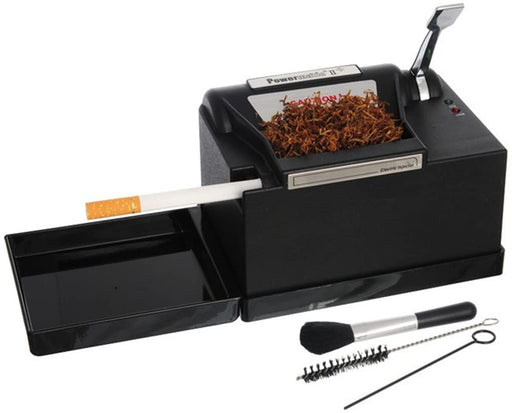
Furthermore, technological developments are essential for increasing market expansion
Also, with advancing age, the pylorus (the valve between the stomach and duodenum) relaxes and allows extra bile (a compound produced in the liver to aid in digestion) to seep up into the stomach and erode the stomach lining